


GROOMER IMMIGRATION LAW
Even though we specialize in Immigration Law, we also represent clients in many areas of the law.
ABOUT THE FIRM
Groomer Immigration Law
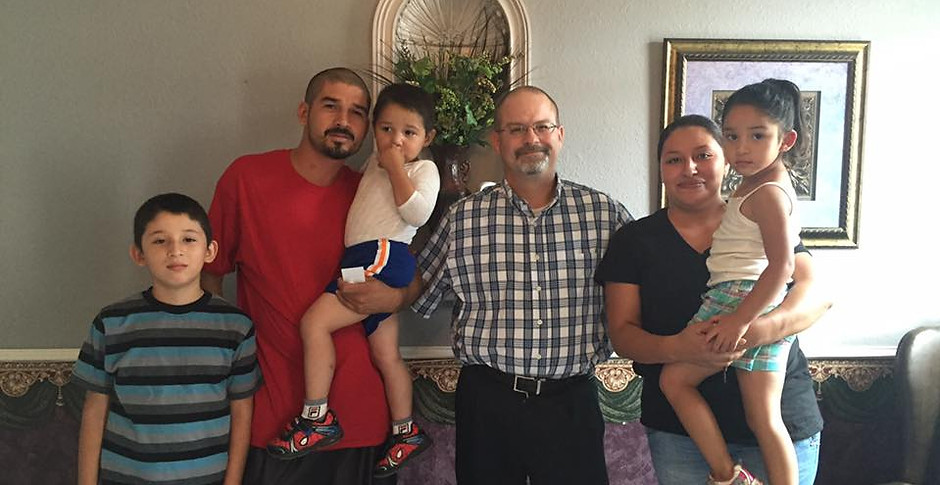
Groomer Immigration Law wants to help people and their families in their immigration matters. Together, we can work to find solutions to your immigration concerns.
Please come visit us at our office in Monett, Missouri, so that we can talk.
MEET THE TEAM
Experienced and Strategic.
DARWIN E. GROOMER
Attorney
Mr. Groomer has specialized in Immigration Law since 2010, and during that time he has represented hundreds of clients in a wide array of immigration matters. Mr. Groomer takes special care to review and research each case, so that he can help come up with the best result for his client.
Mr. Groomer graduated from the University of Arkansas
ANABELL GROOMER
Legal Assistant
Anabell was born in Honduras, but after Darwin Groomer and Anabell were married in 1999, the couple worked together to help her become a naturalized U.S. Citizen. Anabell is now bilingual and serves as the legal assistant of immigration law for the Groomer Law Firm.
HEATHER WASHBURN
Legal Assistant
I am Mr. Groomer's Legal Assistant that works with client’s to complete case work specific to Criminal, Domestic and Civil Cases. I have been with Groomer Law Firm since 2012, and have over 10 years of office management, administrative and customer service experience. I use all of my administrative skills in this career to help others with all their case needs. I find great enjoyment in my job and feel that there is no greater feeling than the satisfactory feeling of helping other people in their time of need.
CONTACT OUR OFFICE
Mon - Fri: 8:30am - 5:00pm
206 East Broadway, Monett MO, 65708
PRACTICES AREAS

FAMILY IMMIGRATION LAW
DACA (Deferred Action for Child Arrivals)
Naturalization/Citizenship/Adjustments
Petitions: Family/Spouse?Fiance
Permanent Residency (Green Card)
Visas: Nonimmigrant / Immigrant
Consular Process/Hardship Waivers
Humanitarian Parole
Deportation/Removal/Bond
Immigration Court Representation
USCIS Motions to Appeal
U-Visa / Vawa / Family Unity
Deffered

DEPORTATION PROCEEDINGS
ICE Representation
Immigration Court / Bond Hearings
Suspension of Deportation
Cancellation of Removal
VAWA Cancellation of Removal
Board of Immigration Appeals
Prosecutorial Discreations
Do you have a legal issue not addressed here? Contact us to find out more.
MOVING TO UNITED STATES
MOVING TO THE UNITED STATES
Living in the United States is the dream of millions around the world. While those of us who are born in the United States take our freedom AND our country for granted, many others long for the day they can live and work in America.

LAWFUL PERMANENT RESIDENCE
The most important step towards fulfilling this dream is to work for Permanent Residence. This can be accomplished in several ways, but it most commonly takes place through a Family-Based Petition. Only U.S. citizens and Permanent Residents can apply for family members, and then only certain types of relatives are eligible. Depending upon which country the family member is from and the type of relative filing the petition, the time necessary to finally receive Lawful Permanent Residence may vary.
Additionally, if the person for whom the application is being filed is living in the United States, after having entered without a visa or other type of lawful admission, that person may need to file for a waiver to “waive” his or her non-lawful presence in the United States. There are many things that could be present in the relative’s past that may require different document filings to make him or her eligible for Lawful Permanent Residence.
As stated above, there are several other ways to apply for Lawful Permanent Residence. It is crucial to discuss the person’s case and whether or not he or she qualifies for Permanent Residence with an experienced immigration attorney.

FIANCE VISA
As was true in my particular case, I fell in love with a girl from Honduras and got married in her country, before she actually resided in the United States. Even if we had become engaged to marry and desired to marry in the United States, I could have filed for a fiancé visa, or a Conditional Permanent Residence for my fiance. Then, I could have applied for her Lawful Permanent Residence after she had arrived in the United States.
In the case of marrying outside of the United States, a person can still file the same type of visa to get their new spouse into the U.S. before Lawful Permanent Residence. They can adjust the spouse’s status to Permanent Resident status from Conditional Permanent Resident status.
If someone files a fiance visa for their future spouse, with the intention of marrying after arrival in the United States, they are required to marry within a specific time period after arrival, usually within 90 days.

AMERICAN CITIZENSHIP
Citizenship in the United States is a dream for millions of people around the world. It is the ultimate goal for people who enter into the immigration process. However, as the immigration laws are currently written, the naturalization process can be long, complicated and very frustrating.
With a few exceptions, an individual must achieve permanent residence before they can become an American Citizen. Once permanent residence is accomplished, the person must wait at least three years to apply for citizenship, if they are married to a U.S. Citizen, or at least five years, if they wish to apply without considering the status of their spouse.
Becoming a U.S. Citizen has many advantages. It becomes much easier to apply for permanent residence for family members, but there are all of the obvious benefits. A U.S. Citizen can vote in elections. It becomes easier for them to travel overseas, and more financial opportunities are available for college tuition assistance. Of course, a U.S. Citizen can also run for public office. However, another benefit is that a U.S. Citizen cannot be deported. They no longer have to worry about immigration.
Since the citizenship can be overwhelming, it is important for the person to hire an immigration lawyer, who will try to help them obtain citizenship.

Waivers of Inadmissibility
Whenever a person is trying to achieve lawful permanent residence, and ultimately American citizenship, problems may arise if they have entered and have been in the United States unlawfully for over a certain period of time. If this is the case, the individual will deemed inadmissible, if they ever leave the United States and wish to return.
Ordinarily, when someone applies for permanent residence, they will be required to return to their native country for an interview. There are several exceptions, but after the interview in the native country, the person will not be allowed to re-enter the U.S., unless they get a Waiver of Inadmissibility.
The person should consult with an immigration attorney, so that they can discuss their particular case and specific set of circumstances.
PROBLEMS WITH IMMIGRATION WHILE IN THE UNITED STATES
Unless a person is a U.S. Citizen, there is always the possibility that they could face deportation. Even a Lawful Permanent Resident can lose their legal status in the United States, if they commit certain crimes. But, if someone is in the United States without lawful status, deportation is always a frightening possibility.
Deportation (otherwise known as “removal proceedings”) is when a person is removed or exiled from the United States for not complying with American law. Once the person is deported, they have to wait a certain period of time before they are allowed to return to the United States. Of course, the person can apply for a Waiver of Inadmissibility, which can help them return to the U.S. earlier, if it is granted.
1.Deportation
Unless a person is a U.S. Citizen, there is always the possibility that they could face deportation. Even a Lawful Permanent Resident can lose their legal status in the United States, if they commit certain crimes. But, if someone is in the United States without lawful status, deportation is always a frightening possibility.
Deportation (otherwise known as “removal proceedings”) is when a person is removed or exiled from the United States for not complying with American law. Once the person is deported, they have to wait a certain period of time before they are allowed to return to the United States. Of course, the person can apply for a Waiver of Inadmissibility, which can help them return to the U.S. earlier, if it is granted. There are many reasons a person is deported, but the most common reason is the commission of some type of crime. It is usually very frightening for someone when they are faced with the possibility of being forced to leave the United States. When this type of situation arises, the person should always hire an immigration lawyer to help them through the deportation process and to hopefully keep them from getting removed from the United States.

CANCELLATION OF REMOVAL
When an individual is in removal proceedings, the Immigration Judge will usually ask if the person is going to seek for any type of relief, thereby allowing them to delay the deportation process or to get out of deportation completely.
If the person has been in the United States for at least ten years and has no criminal history, they may be eligible for cancellation of removal, which would allow them to achieve lawful permanent residence, if cancellation of removal is granted. Also, while waiting for the cancellation of removal to be heard by the Immigration Court, the individual is able to apply for a work permit (Employment Authorization Document).

3.POLITICAL ASYLUM / CONVENTION AGAINST TORTURE
In some cases, if an individual is able to prove a legitimate fear of returning to their native country, they may be eligible for Political Asylum. However, the person has only one year to apply for Asylum, after their arrival in the United States.
If the person has been in the U.S. for over one year, they may be eligible for protection by the Convention Against Torture (CAT) provisions, if they are able to prove that they would be targeted and persecuted due to a specific social class the person belongs to.
As is true with Cancellation of Removal, an applicant for Asylum or CAT protection is usually able to apply for a work permit, while the case is being processed.

4.APPEALS FOR DENIAL, MOTION TO RECONSIDER, MOTION TO RE-OPEN
If a person loses their deportation case, there is usually the option to have the Court review the case and possibly change its ruling, or for the Board of Immigration Appeals to hear an appeal. A Motion to Reconsider is usually filed when the person thinks an error of law or of fact has been made by the Board in a previous ruling. A Motion to Re-open is filed when the person desires to present new evidence or new facts.

DACA (DEFERRED ACTION FOR CHILDHOOD ARRIVALS)
In 2012, the Deferred Action for Childhood Arrivals law was passed, which now allows children, who came to the United States as children, before they were sixteen years of age and before June, 2012, to now apply for DACA which prevents them from being deported for unlawful presence in the United States.
DACA does have certain requirements for applicants, but most children are eligible for this program. With an approved DACA application, the person will receive an Employment Authorization Document (EAD) and will be able to get driver’s license and social security card.

NON-IMMIGRATION VISAS
There are many who wish to come to the United States, but who do not want to reside here. They may simply want to visit a family member or come to the U.S. for an emergency issue.

1.TOURIST VISA
A person can apply for a Tourist Visa at the U.S. Embassy in their respective country. If the person can prove to the Embassy that they have definite ties to their country and do not intend to remain in the United States permanently, they could be granted a Tourist Visa, which is granted for a particular period of time.
OUR LEGAL PRACTICES

2.STUDENT VISA
If a person desires to come to the United States to study in a college or university, they will normally have to apply for a student visa, which remains in effect for as long as the person remains in school as a student.

3.HUMANITARIAN VISA
If a person is a able to prove a legitimate emergency, which requires them to enter the United States, they may be eligible for a humanitarian visa. This usually involves a medical or other type of health-related matter, which can only be addressed in the United States. However, there are other situations, in which the United States government will allow entry into the U.S. for a specified period of time.
It is always advisable to discuss your particular situation with an immigration attorney, so that they can help you understand your options.
CONTACT US TODAY
From major cases to legal questions, we are here to help.
Phone:
417-235-7834


